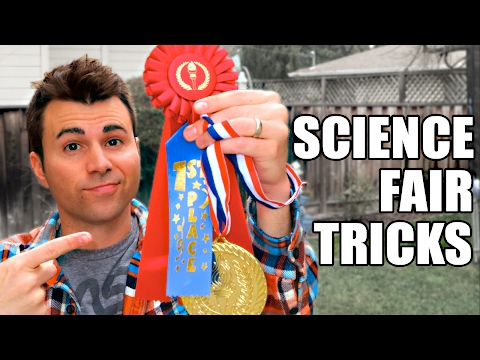
What age is this video appropriate for?
This video is best suited for kids aged 8 and up, as the concepts — like controlling variables, forming hypotheses, and interpreting results — are most relevant to children who are approaching or already participating in school science fairs. Younger children may enjoy it with a parent but won't get as much practical value from it.
Is there any inappropriate content in this video?
No, the video is free of language, violence, sexual content, or other inappropriate material. All classification scores are very low, making it a clean and safe watch for school-age children.
Does the video contain any advertising or sponsored content?
There is a brief promotional segment at the end where the host introduces a guest from a YouTube comedy channel called Studio C and encourages viewers to subscribe. It is clearly presented and not deceptive, but parents should know it's there.
Is this video actually educational, or is it just entertainment?
It is genuinely educational — the host explains key scientific method concepts including hypothesis formation, isolating variables, and measurement accuracy in a way that is both accurate and easy to understand. These are real skills that will help kids design better science fair projects.
Are any of the suggested science fair experiments dangerous?
The vast majority of ideas are completely safe, such as paper airplanes, card shuffling, and free throw practice. The host briefly mentions a past experiment involving placing rubber animals on a road, but explicitly tells kids not to repeat it and suggests a safer alternative instead.
Will this video actually help my child win a science fair?
The tips are practical and grounded in real scientific thinking — choosing relatable topics, controlling variables, and practicing the interview portion are all genuinely useful strategies. While results will vary, the guidance here is more substantive than most generic science fair advice found online.