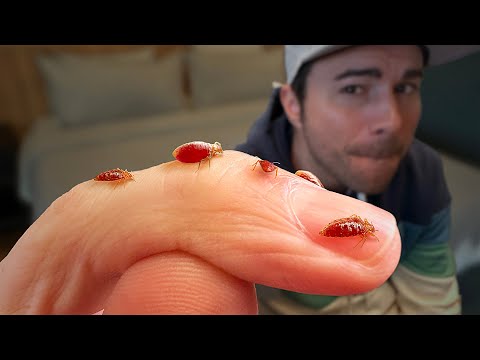
What age is this video appropriate for?
We recommend this video for ages 10 and up. Younger children may be disturbed by close-up footage of live infestations, the host allowing bugs to feed on his arm, and a metaphor-based explanation of a graphic insect reproductive behavior. Older kids and tweens will likely find it fascinating and genuinely educational.
Is there anything sexual in this video?
There is a brief explanation of traumatic insemination — a real biological behavior in bedbugs — using a plug, outlet, and hammer as metaphors. It is not graphic or titillating, but parents of younger or sensitive children may want to preview this segment (roughly the two-thirds mark of the video) before letting kids watch.
Is the science in this video accurate and trustworthy?
Yes — the video is produced in collaboration with Dr. Changlu Wang, a real entomologist at Rutgers University, and the experiments shown are legitimate controlled tests. The advice given (diatomaceous earth, heat treatment, encasements) aligns with mainstream pest control guidance and debunks common misinformation.
Is there advertising or sponsored content in this video?
Yes, the final 2-3 minutes are a sponsored segment promoting CrunchLabs, the host's own STEM subscription box service. It is enthusiastic and product-focused but clearly transitions from the main content, so kids can easily recognize it as an ad with a little guidance from parents.
Will this video scare young children or cause anxiety about bedbugs?
Possibly for younger or anxious children — there are close-up shots of large infestations, live bugs feeding on skin, and discussion of bugs surviving for 300 days without food. However, the overall tone is reassuring, emphasizing that bedbugs are manageable and don't transmit disease, which may actually reduce fear for older kids.
Is there any dangerous behavior kids might try to imitate?
The host allows bedbugs to feed on his arm, which is done under expert supervision in a controlled lab setting. The video does not encourage viewers to replicate this, and the context makes clear it is a scientific demonstration. No other imitable risky behavior is present.