Watchly Safety Review

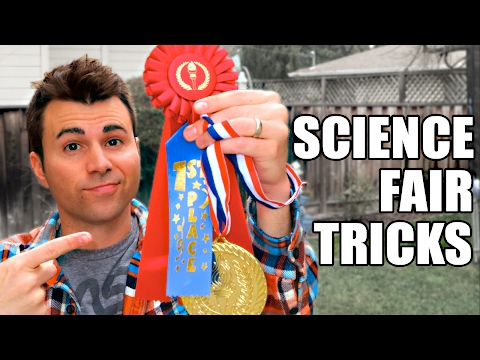
1st place science fair ideas- 10 ideas and tricks to WIN!

Mark Rober
11:36 · 9.4M views · February 1, 2017
All reviews →
Minor FlagsReviewed June 2026
2Minor Flags
5No Issues

This science fair tips video is safe and genuinely educational for school-age kids, offering creative, relatable project ideas alongside solid lessons in the scientific method. The host is enthusiastic and knowledgeable, making science feel exciting rather than a chore, though the video ends with a brief promotional segment for a comedy sketch channel that parents should be aware of.

Content Breakdown · 7 Categories

Realistic Violence, Threats & WeaponsNot present

The only tangential reference to harm is a brief mention of a prior video where the creator tested whether drivers would swerve to hit rubber animals on the road — he explicitly says 'I don't recommend you repeat this' and frames it as a past experiment, not a threat or weapon demonstration.

See evidence (1)
I made a video to test which animal people would swerve more to hit on the side of the road. So, I used a rubber tarantula, snake, and turtle. Now, I don't recommend you repeat this...
Bullying, Cruelty & DiscriminationNot present

The creator mildly mocks conventional science fair ideas as 'boring' and 'lame,' but this is directed at project topics rather than any person or group, and does not rise to the level of bullying or cruelty.

See evidence (2)
that is so boring. What a lame first exposure to the scientific method that would be.
it's easier to explain how you dominate your friends in rock paper scissors than it is to get pumped about a slightly withered plant in the shade.
Hidden Advertising & Sponsored ContentA little

The creator promotes a Studio C YouTube channel and their collaborative video, but this is transparently disclosed as a collab ('we filmed a video together on their channel') rather than a hidden sponsorship. No undisclosed commercial products are promoted.

See evidence (1)
make sure you subscribe to StudioC. They have really funny stuff that's always clean and just really high quality.
Parasocial & Emotional ManipulationNot present

The creator makes a mild call to share the video ('maybe you can share this with someone who does') but this is a straightforward, non-guilt-tripping suggestion rather than emotional manipulation or parasocial dependency building.

See evidence (1)
maybe you can share this with someone who does and then we can replace the really lame ideas that currently come up in Google search results.
Toxic Behavior ModelingNot present

The rubber-animal road experiment is briefly mentioned but explicitly discouraged ('I don't recommend you repeat this'), and a safer alternative is suggested — this is cautionary framing, not glorification of harmful behavior.

See evidence (1)
'I made a video to test which animal people would swerve more to hit on the side of the road... Now, I don't recommend you repeat this, but you can do a slightly safer version...'
Playful & Fantasy ViolenceNot present

The phrase 'dominate your competition' is used in a clearly playful, competitive academic context and does not constitute even stylized fantasy violence.

See evidence (1)
you experiment, you learn something, and then you dominate your competition.
Engagement Baiting & Manipulative CTAsA little

The creator asks viewers to share winning science fair ideas in the comments to build a list, which is a benign community-building request rather than guilt-tripping or superstition-based engagement bait.

See evidence (1)
If you have a really good idea that you won first place with, put in the comments below and then I'll take the best ideas and just make a growing killer list of ideas in the video description.

What Parents Need to Know

This video is a strong educational resource for kids preparing for a science fair. It teaches core scientific concepts like hypothesis formation, controlling variables, and precise measurement in an engaging, accessible way. The host uses real examples — shuffling cards, the five-second rule, paper airplanes — that kids will find genuinely motivating. There are no language, violence, or inappropriate content concerns. The only minor flag is a short plug at the end for a YouTube comedy channel called Studio C, which the host describes as 'always clean,' and a brief mention of collecting tipping data from a hairdresser, which is harmless but slightly off-topic. Overall, this is exactly the kind of content parents can feel good about their kids watching independently.
Talk to Your Kids About

  1. 1Which of the 10 science fair ideas sounded the most interesting to you, and why?
  2. 2What does it mean to have a 'hypothesis,' and can you think of something you'd like to test in your own life?
  3. 3Why is it important to only change one thing at a time in an experiment? What could go wrong if you changed too many things?
  4. 4The video says science fairs are also about learning creativity — what do you think that means?
1st place science fair ideas- 10 ideas and tricks to WIN!
Protected Viewing

What's This Video About?

10 ideas and some power tips to make you the king of your science fair! Studio C collab video! https://youtu.be/QCUyhiF6-0Q Credit to my sister Lisa for being my professional consultant on a lot of these ideas and tips. My 10 ideas: 1. Number of card shuffles 1.5 Do Carrots improve night vision? 2. 5 second rule 3. Dirtiest surfaces in your house 4. Helium soccer balls 5. Rock, Paper, Scissors strategy- http://www.huffingtonpost.com/2014/05/03/rock-paper-scissors_n_5255288.html 6. Does Practice make Perfect? 7. Best paper airplane 8. Best microwave strategy. Measure the speed of light- https://www.youtube.com/watch?v=GH5W6xEeY5U 9. Rubber animal reactions 10. “He looks just like you” Additional awesome ideas from the comments: 1. How often do people actually stop at stop signs? See if there are patterns for age, car model, etc. 2. ??? 4 power tips: 1. Make it relatable 2. Measure 1 thing. Change 1 thing. 3. Make a prediction 4. Practice the interview Haircut tips raw data- https://www.dropbox.com/s/hctsaf86pvste2l/Haircut%20Tip%20Amounts.xlsx?dl=0 MUSIC- 0:08- Almost Original- Joakim Karud- https://soundcloud.com/joakimkarud 2:01- Berlin- Andrew Applepie- http://andrewapplepie.com/ Summary: I'm a big fan of science fairs because for a lot of kids it's their first exposure to science! But I think a lot of times it's not a good first impression. I tried to come with 10 ideas and general tips that will make it way more awesome for the student. PLEASE CONSIDER SUBSCRIBING: http://tinyurl.com/MarkRober-Sub ****************************************­ I make videos like this once a month all year long while supplies last: CHECK OUT MY CHANNEL: http://tinyurl.com/MarkRober-YouTube FACEBOOK: https://www.facebook.com/MarkRoberYouTube TWITTER: https://twitter.com/#!/MarkRober INSTAGRAM: https://www.instagram.com/markrober/

Frequently Asked Questions

What age is this video appropriate for?

This video is best suited for kids aged 8 and up, as the concepts — like controlling variables, forming hypotheses, and interpreting results — are most relevant to children who are approaching or already participating in school science fairs. Younger children may enjoy it with a parent but won't get as much practical value from it.

Is there any inappropriate content in this video?

No, the video is free of language, violence, sexual content, or other inappropriate material. All classification scores are very low, making it a clean and safe watch for school-age children.

Does the video contain any advertising or sponsored content?

There is a brief promotional segment at the end where the host introduces a guest from a YouTube comedy channel called Studio C and encourages viewers to subscribe. It is clearly presented and not deceptive, but parents should know it's there.

Is this video actually educational, or is it just entertainment?

It is genuinely educational — the host explains key scientific method concepts including hypothesis formation, isolating variables, and measurement accuracy in a way that is both accurate and easy to understand. These are real skills that will help kids design better science fair projects.

Are any of the suggested science fair experiments dangerous?

The vast majority of ideas are completely safe, such as paper airplanes, card shuffling, and free throw practice. The host briefly mentions a past experiment involving placing rubber animals on a road, but explicitly tells kids not to repeat it and suggests a safer alternative instead.

Will this video actually help my child win a science fair?

The tips are practical and grounded in real scientific thinking — choosing relatable topics, controlling variables, and practicing the interview portion are all genuinely useful strategies. While results will vary, the guidance here is more substantive than most generic science fair advice found online.

More from Mark Rober

See all →
My $60,000,000 Experiment0:59
My $60,000,000 Experiment
841K views·May 29, 2026
Minor flags
How To Keep a Skyscraper From Falling Over0:41
How To Keep a Skyscraper From Falling Over
8.3M views·May 28, 2026
Safe
Tennis Ball Cannon vs Human Strength0:30
Tennis Ball Cannon vs Human Strength
19.5M views·May 14, 2026
Major issues
You’re Breathing Dinosaur Breath!0:38
You’re Breathing Dinosaur Breath!
6.5M views·Apr 30, 2026
Safe

What Watchly checks every video for

Every video is checked against Watchly's 21 content patterns. Here are a few of them.

© 2026 Watchly. All rights reserved.
Not affiliated with YouTube or Google. All creator content remains property of original creators.