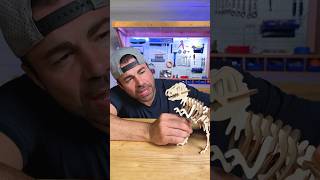
This is a high-quality educational engineering video from Mark Rober, a former NASA engineer, showing the iterative design process of building a rocket-powered golf club. The content is genuinely educational, demonstrating real engineering principles, problem-solving, and scientific collaboration, though it does involve rockets, high-speed impacts, and destruction of objects like watermelons and glass.
Content Breakdown · 7 Categories
Strong & Crude Language
A little▶
Contains mild crude language with 'butt ton' used once in a non-aggressive context. This is borderline crude but not strong profanity.
▶See evidence (1)Hide evidence
“So we got some aluminum C channel and just dumped a butt ton of epoxy in there.”Mid-video during shaft reinforcement explanation
Hidden Advertising & Sponsored Content
A little▶
Contains promotional content for creator's own company (CrunchLabs) with direct sales pitch and promotional links. While disclosed as his own company, it's integrated into the video content rather than clearly separated as a sponsorship segment.
▶See evidence (1)Hide evidence
“I started a company called CrunchLabs where we build a toy together and then I teach you all the juicy physics for how it works. So if you want to learn to think like an engineer and have really fun time doing it, check out the current promotion where you get 2 FREE boxes at https://crunchlabs.com”Video description and likely early in video
Toxic Behavior Modeling
A little▶
Minor concern: destroying objects (watermelon, glass) for entertainment, though framed within physics demonstration context. Safety precautions are mentioned and demonstrated.
▶See evidence (2)Hide evidence
“And then some glass just because. (glass breaking)”End of video during demonstration sequences
“And then keeping with the tradition of my channel, some watermelon.”
Engagement Baiting & Manipulative CTAs
A little▶
Minor engagement request present with channel cross-promotion, though relatively mild and standard for YouTube content.
▶See evidence (2)Hide evidence
“You should also go subscribe to the CrunchLabs YouTube channel cause we've got some bangers in the pipeline”Video description and end of video
“So I will leave a link in the video description and while you're there, make sure to check out some of his other videos and subscribe to his channel”
Dangerous Internet Challenges
A little▶
Contains potentially dangerous activity (rocket-powered equipment, high-speed projectiles) but with clear safety precautions, professional setting, and explicit acknowledgment of danger. Not framed as a challenge for viewers to replicate.
▶See evidence (3)Hide evidence
“We went to test our new dual rocket setup with two e-motors and everything went perfectly. Except for the part where the head stamped off the driver.”Throughout video during testing sequences
“Now that we got all the shots we needed, it was time to have some real fun. We started with a handheld version that was powered by a single c-motor because anything more than that would just be way too unsafe for me to hold.”
“Wow, like I'm laughing, but that could've been bad.”
Low-Quality, Extreme & Stunt Content
A little▶
Contains some stunt/extreme elements (rocket-powered golf club, destroying objects) but primarily framed as educational engineering content demonstrating the design process. The destruction serves a physics demonstration purpose rather than pure shock value.
▶See evidence (3)Hide evidence
“Golf balls shattering glass in super slow-mo, pulverized watermelons”Throughout video, particularly end sequences
“And then some glass just because.”
“And then keeping with the tradition of my channel, some watermelon.”
Playful & Fantasy Violence
A little▶
Contains playful destruction of inanimate objects (watermelons, glass) in a clearly experimental/physics demonstration context. No violence toward people or animals. Framed as scientific demonstration rather than aggression.
▶See evidence (3)Hide evidence
“Golf balls shattering glass in super slow-mo, pulverized watermelons”End of video during demonstration sequences
“And then some glass just because. (glass breaking)”
“Thanks for cutting open a watermelon with a rocket powered golf club”
What Parents Need to Know
This video showcases legitimate STEM education through an exciting engineering project, but parents should know it involves rockets, high-speed machinery, and intentional destruction of objects (glass, watermelons). The creators emphasize safety precautions throughout and explicitly show the engineering design process including failures. There's mild language (one bleeped word, 'butt ton') and the destruction scenes, while clearly controlled experiments, might inspire unsafe imitation attempts. The collaboration with another educational YouTuber (Smarter Every Day) adds credibility. This is not mindless destruction—every element serves an educational purpose about physics, engineering iteration, and problem-solving.

Talk to Your Kids About
1What engineering problems did Mark and his team encounter, and how did they solve each one? Can you think of a time you had to try multiple solutions to fix something?
2Why do you think the video showed the failures and mistakes instead of just the final success? What does this teach us about how real engineering works?
3The video involves rockets and breaking things—why is it important that they took safety precautions and filmed in a remote location? What could go wrong if someone tried this at home?
4Mark worked with other engineers and a fellow science YouTuber. How did teamwork help make this project successful?
Protected Viewing
What's This Video About?
▶
My golf game has improved.
ALSO, see how I make all my builds: https://markroberbuildinstructions.com
DESTIN'S VIDEO- https://www.youtube.com/watch?v=JT0wx27J9xs
I started a company called CrunchLabs where we build a toy together and then I teach you all the juicy physics for how it works. So if you want to learn to think like an engineer and have really fun time doing it, check out the current promotion where you get 2 FREE boxes at https://crunchlabs.com
You should also go subscribe to the CrunchLabs YouTube channel cause we’ve got some bangers in the pipeline- https://www.youtube.com/crunchlabs
Thanks to these folks for providing some of the music in the video:
Ponder - https://youtube.com/@Pondermusic
Laura Shigihara - @supershigi
Andrew Applepie - https://soundcloud.com/andrewapplepie
Blue Wednesday - https://soundcloud.com/bluewednesday
Summary: We made a rocket powered golf club that can swing at 150mph. Instead of just showing the final build I wanted to walk through the engineering design process. We failed in 6 different ways before eventually getting it just right. My friend Destin came and helped out and shot some amazing high speed shots on his nice Phantom camera.
MERCH (all proceeds go to Autism Speaks):
They are soft- https://teespring.com/stores/markrober
PLEASE CONSIDER SUBSCRIBING: http://tinyurl.com/MarkRober-Sub
****************************************
I make videos like this once a month all year long while supplies last:
CHECK OUT MY CHANNEL: http://tinyurl.com/MarkRober-YouTube
FACEBOOK: https://www.facebook.com/MarkRoberYou...
TWITTER: https://twitter.com/#!/MarkRober
INSTAGRAM: https://www.instagram.com/markrober/
Frequently Asked Questions
Is this video appropriate for elementary school kids?▶
Yes, for upper elementary (ages 10+). The content is genuinely educational and demonstrates real engineering principles. Younger children might be inspired to attempt dangerous imitations, so parental context about safety is important. The destruction elements are clearly controlled experiments, not gratuitous.
Will this video make my child want to build dangerous things with rockets?▶
The video actually emphasizes the engineering design process, safety precautions, and shows that this required months of work by experienced engineers in controlled conditions. It's an opportunity to discuss why certain experiments require expertise and proper safety measures. The educational value outweighs imitation risk if parents provide context.
Is this just entertainment or does it have real educational value?▶
This has substantial educational value. Mark Rober is a former NASA engineer who explicitly walks through six engineering learning opportunities, demonstrates iterative design, explains physics concepts like center of mass and force distribution, and shows authentic problem-solving. It's entertainment that teaches genuine STEM principles.
What about the destruction of watermelons and glass—is that appropriate?▶
The destruction serves specific purposes: testing the golf club's power and providing visual demonstrations of force and impact. It's presented as controlled experimentation rather than mindless destruction. These scenes occupy a small portion of the 15+ minute video focused primarily on engineering process.
Are there any concerning elements parents should watch for?▶
There's one instance of mild language ('butt ton' of epoxy) and the video involves rockets and high-speed machinery. The main concern is imitation—kids might be inspired to experiment with dangerous materials. Parents should emphasize that this required professional expertise, safety equipment, and remote locations.
Does this promote the educational YouTuber in a good way?▶
Yes, Mark Rober collaborates with Destin from Smarter Every Day, another highly respected science educator. The cross-promotion introduces kids to quality educational content. Both creators are known for legitimate science communication and have backgrounds in engineering and physics.
What age is "Rocket Powered Golf Club at 100,000 FPS" appropriate for?▶
Watchly's safety review recommends "Rocket Powered Golf Club at 100,000 FPS" for ages 10 and up. See the content breakdown above for the category-by-category findings behind this recommendation.