Watchly Safety Review

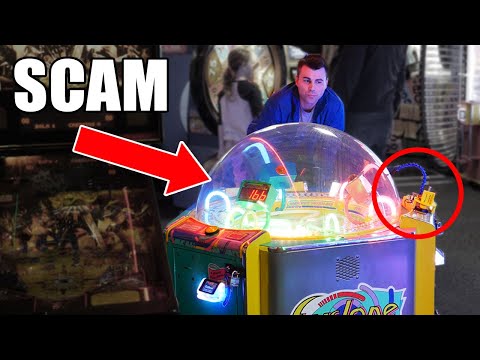
This Arcade Game is a SCAM (I have proof)

Mark Rober
7:09 · 50.9M views · January 3, 2018
All reviews →
Minor FlagsReviewed June 2026
2Minor Flags
3No Issues

This video is safe and genuinely educational for older kids and teens, using a clever engineering experiment to expose how a popular arcade game exploits psychology rather than rewarding skill. The creator builds a precise robot, applies the scientific method to troubleshoot it, and draws a thoughtful conclusion about consumer awareness — though parents should note the device was used covertly in a public arcade, which models a mild form of rule-bending behavior.

Content Breakdown · 5 Categories

Strong & Crude LanguageNot present

The transcript contains no profanity, slurs, or crude language; the only borderline term is 'dank memes,' which is mild internet slang with no offensive intent.

See evidence (1)
'pull out your phone like you're checking dank memes' — casual slang, not crude language
Parasocial & Emotional ManipulationNot present
Gambling Mechanics in GamesA little

The video discusses the 'near miss effect' and random-outcome mechanics in arcade redemption games, but does so critically and educationally to expose the scam rather than to promote or normalize gambling behavior.

See evidence (2)
'this arcade game presents itself as a winnable game of skill when in reality it's a random dice roll that is heavily stacked against you'
'In gambling psychology, this is known as the near miss effect, and people will spend much more money to try and win'
Engagement Baiting & Manipulative CTAsNot present

The description includes a standard 'PLEASE CONSIDER SUBSCRIBING' link, which is a routine and non-coercive CTA with no guilt-tripping, superstition framing, or exclusion language attached.

See evidence (1)
'PLEASE CONSIDER SUBSCRIBING' — standard, non-manipulative channel promotion
Toxic Behavior ModelingA little

The creator builds and deploys a concealed device to cheat at an arcade game, framing it as clever engineering. While the primary intent is investigative journalism exposing a scam, the act of disguising a cheating device in a backpack and using it in a public arcade is modeled on screen without significant moral consequence, which could be imitable by younger viewers.

See evidence (3)
'we put it in a backpack and cut a hole in the bottom so the plunger could access the big button on the machine'
'you simply walk in, set the backpack down and then pull out your phone like you're checking dank memes. As you can see, the disguise worked really well and no one ever suspected anything'
'Well, I mean cheating's a strong word. - You're cheating! - I'm using an advantage I might have created myself.'

What Parents Need to Know

This is a high-quality STEM video that walks kids through real engineering concepts — CAD design, 3D printing, Arduino programming, solenoids, and systematic troubleshooting — in an engaging, accessible way. The creator references Carl Sagan and explains concepts like the scientific method and gambling psychology (the 'near miss effect'), making it genuinely educational. The main concern is that the creator builds a device to gain an unfair advantage at an arcade game and uses it covertly in public spaces, which could be seen as cheating or circumventing the rules of a business. The video does acknowledge this tension with a lighthearted exchange at the end where a child calls it cheating. There is no foul language, violence, or inappropriate content, but the ethical gray area of the stunt is worth discussing with kids.
Talk to Your Kids About

  1. 1The creator says 'cheating is a strong word' — do you think what he did was cheating? Why or why not?
  2. 2What is the scientific method, and how did the creator use it to figure out whether his machine or the game was the problem?
  3. 3The video explains something called the 'near miss effect' — can you think of other games or apps that might use this trick to keep you playing?
  4. 4If a game looks like it rewards skill but is actually random, is it fair for businesses to sell it that way? What would be a more honest way to run it?
This Arcade Game is a SCAM (I have proof)
Protected Viewing

What's This Video About?

Don't feel bad. You don't suck, the game makers do. Check out Destin's (Smarter Every Day) hummingbird video here: https://youtu.be/E-mBzo35uW0 Summary: I built a machine to win an arcade game every time that was super accurate. In doing so I accidently discovered that this arcade game is totally rigged. PLEASE CONSIDER SUBSCRIBING: http://tinyurl.com/MarkRober-Sub ****************************************­ I make videos like this once a month all year long while supplies last: CHECK OUT MY CHANNEL: http://tinyurl.com/MarkRober-YouTube FACEBOOK: https://www.facebook.com/MarkRoberYouTube TWITTER: https://twitter.com/#!/MarkRober INSTAGRAM: https://www.instagram.com/markrober/

Frequently Asked Questions

What age is this video appropriate for?

We recommend this video for ages 10 and up. The engineering and psychology concepts are best appreciated by older kids, and the ethical discussion around covertly using a device in a public arcade is worth having with a child mature enough to think critically about it.

Is there any bad language or inappropriate content in this video?

No, the video is clean with no profanity, violence, or sexual content. It is one of the more wholesome examples of science and engineering content on YouTube.

Does this video teach kids how to cheat at arcade games?

The video does show a homemade device being used to gain an advantage at an arcade game, and the creator shares technical details about how it was built. However, the primary focus is on using the device as a scientific tool to prove the game is rigged, not as a how-to cheating guide. It's still worth discussing the ethical side with your child.

Is the gambling psychology content appropriate for kids?

The creator briefly explains the 'near miss effect' — a real psychological concept used in gambling — in a factual, consumer-awareness context. It is presented critically, warning viewers not to fall for it, which makes it age-appropriate and educational rather than harmful.

What does my child learn from watching this video?

Kids are exposed to practical STEM skills including CAD design, 3D printing, Arduino programming, sensor calibration, and systematic troubleshooting. They also learn about critical thinking, the scientific method, and how businesses can use psychology to influence spending decisions.

Is the creator promoting rule-breaking or dishonest behavior?

The creator does use a covert device in a public arcade, which is an ethical gray area the video lightly acknowledges. However, the overall message is one of consumer advocacy — exposing a deceptive product — rather than glorifying cheating, and the tone is investigative rather than malicious.

More from Mark Rober

See all →
My $60,000,000 Experiment0:59
My $60,000,000 Experiment
841K views·May 29, 2026
Minor flags
How To Keep a Skyscraper From Falling Over0:41
How To Keep a Skyscraper From Falling Over
8.3M views·May 28, 2026
Safe
Tennis Ball Cannon vs Human Strength0:30
Tennis Ball Cannon vs Human Strength
19.5M views·May 14, 2026
Major issues
You’re Breathing Dinosaur Breath!0:38
You’re Breathing Dinosaur Breath!
6.5M views·Apr 30, 2026
Safe

What Watchly checks every video for

Every video is checked against Watchly's 21 content patterns. Here are a few of them.

© 2026 Watchly. All rights reserved.
Not affiliated with YouTube or Google. All creator content remains property of original creators.