Watchly Safety Review

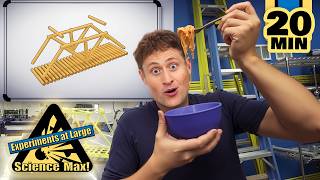
Awesome Experiments You Can Do at Home Part 2 | Science Max

Science Max - 9 Story
18:08 · 18K views · January 21, 2025
All reviews →
Safe for Most KidsReviewed June 2026

This episode is safe for most kids and is a fantastic, hands-on introduction to physics and engineering concepts like air pressure, inertia, and simple machines. The host, Phil, is enthusiastic and clearly explains each experiment, always reminding viewers to get an adult's help and wear safety glasses. The only minor concern is that some experiments, like the air-powered rocket, could be messy or require careful adult supervision, but the overall tone is educational and encouraging.

What Parents Need to Know

This video is a great resource for sparking curiosity about STEM topics. It covers a wide range of concepts, including air pressure, Newton's laws of motion, states of matter, center of gravity, and simple machines (levers, pulleys, ramps). The host demonstrates each experiment clearly and emphasizes safety, such as using safety glasses and asking for adult help. However, some experiments, like the air-powered rocket that shoots water, could be messy and require a safe outdoor space. Parents should be prepared for their child to want to try these experiments at home, so having common household items (bottles, corks, popsicle sticks, cardboard, etc.) on hand is helpful. The video is fast-paced and packed with information, which might be overwhelming for very young children, but it is excellent for elementary-age kids who love to build and explore.

Talk to Your Kids About

  1. 1Which experiment did you find the most exciting to try at home? Why?
  2. 2The host talked about 'inertia' and 'center of gravity.' Can you explain what those mean in your own words?
  3. 3How does using a lever or a pulley make it easier to lift something heavy? Can you think of other examples in real life?
  4. 4What safety rules did the host remind us about? Why is it important to follow them when doing science experiments?
Awesome Experiments You Can Do at Home Part 2 | Science Max
Protected Viewing

What's This Video About?

Here are some great experiments that you can do with everyday household items! SUBSCRIBE FOR MORE SCIENCE ▶ https://youtube.com/@ScienceMax?feature=shared CHECK OUT OUR WILDEST EXPERIMENTS ▶ https://youtube.com/playlist?list=PLY2vSQEVraKC7MTRY7duSQdfjA33GHnHV&feature=shared WATCH OUR 'MINI MAX' EXPERIMENTS HERE ▶ https://youtube.com/playlist?list=PLY2vSQEVraKBlc8fX1L1ewBdJO6lEtfSH&feature=shared ENJOY THE ENTIRE SEASON 1 COLLECTION ▶ https://youtube.com/playlist?list=PLY2vSQEVraKDpCbiW_2YFlR3ygJEa0Lk7&feature=shared Have you ever done a science experiment and wondered “What would this be like if it were HUGE?” Welcome to Science Max, the exciting series that turbocharges all the science experiments you’ve done at home. #ScienceMax #Science #ScienceExperiments

Frequently Asked Questions

What age is this video appropriate for?

This video is recommended for children ages 6 and up. The experiments and concepts are engaging for elementary-age kids, but the fast pace and detailed instructions may be too complex for younger preschoolers. The host always emphasizes adult supervision for the trickier parts, making it a great family activity.

Are the experiments safe for my child to try at home?

Most experiments are safe with proper adult supervision and safety gear, like the safety glasses the host recommends. The air-powered rocket and dragster involve simple household items (bottles, corks, air pumps, popsicle sticks, cardboard) and are clearly demonstrated. However, the rocket experiment can be messy (water spray) and should be done outdoors, and the cork-pushing step requires an adult's help.

Does this video contain any inappropriate content or language?

No, the video is entirely focused on educational science content. All classification scores for strong language, violence, or other concerns are 0.00. The host uses positive, encouraging language and never includes anything inappropriate. It is a safe and fun learning experience.

What will my child learn from watching this video?

Your child will learn about key physics and engineering concepts like air pressure, Newton's first law of motion (inertia), states of matter (solid, liquid, gas), center of gravity, and simple machines (levers, pulleys, ramps). The video encourages hands-on experimentation and problem-solving, and it shows how to build things like a dragster or a paper airplane, which builds creativity and fine motor skills.

Is this video part of a series, and should I watch the other parts?

Yes, this is 'Part 2' of 'Science Max' experiments. Watching the other parts is not required, but they would likely cover additional fun experiments and reinforce the same positive, educational approach. The series is a great resource for parents looking for safe, engaging STEM content.

My child wants to try the rocket experiment. What should I know?

The rocket experiment uses a bottle, cork, and air pump to create an air-powered rocket. It is important to do it outdoors in a large, open area, and to point the rocket away from people. The host explicitly says to do it with an adult and to wear safety glasses. It is a classic, safe demonstration of air pressure, but it can get wet, so be prepared for that.

More from Science Max - 9 Story

See all →
Wild Machines! | Full Episodes | Science Max | NEW COMPILATION1:02:21
Wild Machines! | Full Episodes | Science Max | NEW COMPILATION
882 views·Jun 19, 2026
Safe
Egg Drop Strategy | Science Max #shorts0:55
Egg Drop Strategy | Science Max #shorts
3K views·Jun 15, 2026
Safe
Experiments with FOOD! | Science Max22:26
Experiments with FOOD! | Science Max
4K views·Jun 12, 2026
Safe
Amazing inventions you should see! | Advanced Materials | Science Max #shorts1:01
Amazing inventions you should see! | Advanced Materials | Science Max #shorts
5K views·Jun 8, 2026
Safe

What Watchly checks every video for

Every video is checked against Watchly's 21 content patterns. Here are a few of them.

© 2026 Watchly. All rights reserved.
Not affiliated with YouTube or Google. All creator content remains property of original creators.