Last Updated: November 14, 2026
Quick Summary
Curated video playlists are sets of videos a parent has reviewed and chosen for a specific child, removing the autoplay drift and surprise recommendations of open YouTube. Because the library is fixed, children get repetition that supports vocabulary, listening, movement and calm transitions, and parents can set predictable viewing limits.
- Repetition from a fixed library helps toddlers learn new words and sound patterns.
- Parent-approved libraries remove the recommendation sidebars that can lead children to unsuitable content.
- Songs with movement invite clapping and dancing, paired with real movement breaks afterwards.
- A familiar, calm playlist can help children settle, especially before bedtime.
- Set a separate profile for each child with its own daily watch time and bedtime window.
Table of Contents
- Why Uncontrolled YouTube Is a Risk for Young Children
- What Curated Video Playlists Are and Why They Matter
- Developmental Benefits of Curated Video Playlists for Children
- Finding Educational Videos for Toddlers Without the Rabbit Holes
- Setting Age-Appropriate Screen Time for Children
- How to Create a Video Playlist for Kids, Step by Step
- Start Building Your Child's Safer Viewing Routine with Watchly Player
- Frequently Asked Questions
Why Uncontrolled YouTube Is a Risk for Young Children
Uncontrolled YouTube is a real threat to your children, and the reason is structural rather than a matter of a few bad videos. For a look at every native YouTube control and where each one falls short, it helps to compare the options directly. A parent who sits a four-year-old down with a familiar cartoon can be several clicks away from something frightening, sexual, or simply designed to sell, within minutes. See how a single sidebar click can lead a young child somewhere unexpected.
Researchers have studied this problem for years. Hundreds of peer-reviewed papers now examine early childhood screen exposure, content quality, and the effects of algorithmic recommendations on young viewers, and the picture they paint is consistent: young children have limited ability to judge what they are watching, and they are poorly equipped to recognise when a video is trying to manipulate them. You can find a good starting point in American Academy of Pediatrics guidance on children and media.
Watchly Player takes a different route: parents decide what goes into a child's library, so the open internet never reaches the child's screen in the first place.
What Curated Video Playlists Are and Why They Matter
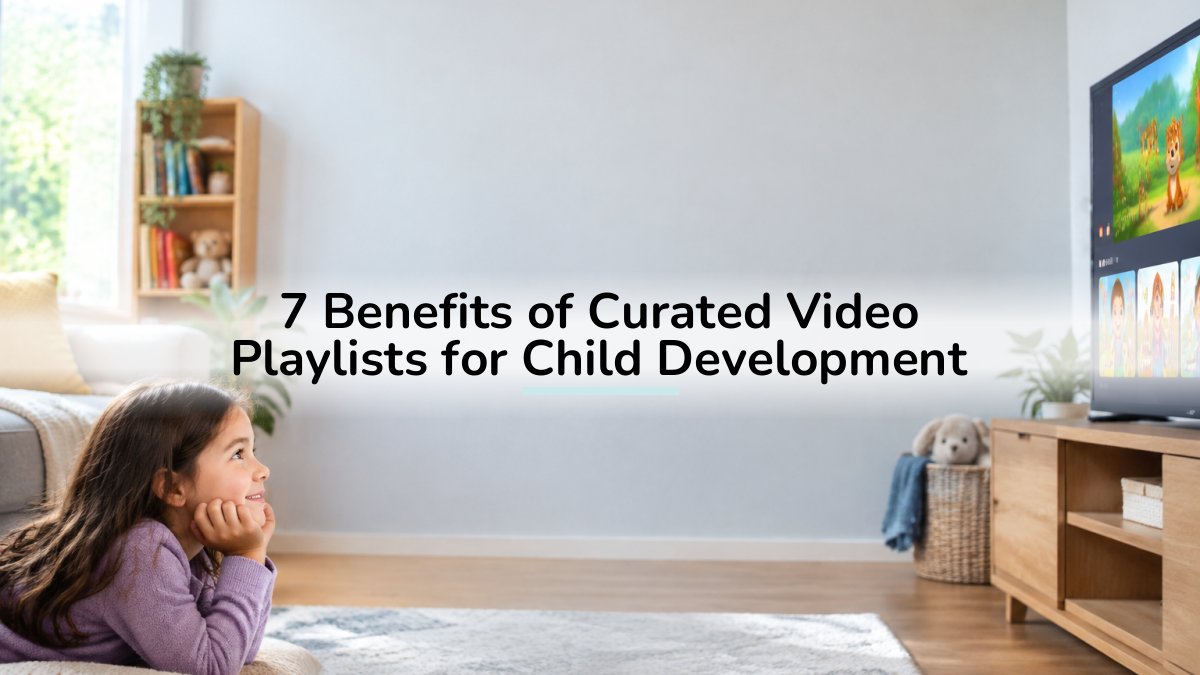
A curated video playlist is a set of videos that a parent has reviewed and chosen for a specific child, rather than a feed the platform assembles automatically. Think of it as a small, trusted library that the child can browse freely, with no sidebar of suggestions pulling them elsewhere.
Curation matters because it removes the most unpredictable part of the experience. Every video in the library has already been approved, so there is no autoplay drift and no surprise recommendation. For parents who want their child to enjoy music, stories, and learning content without constant supervision, a curated library turns open-ended browsing into a controlled, repeatable routine.
Watchly Player builds this model in. Each child gets a separate profile with its own library and limits.
Developmental Benefits of Curated Video Playlists for Children
Curated playlists are useful because they let parents choose content that supports specific developmental goals. Music and rhythm, for example, are widely discussed in child development research as a support for language, memory, and social-emotional growth. When the content is chosen deliberately, a child spends their screen time with material that is worth repeating.
Language, Vocabulary and Listening Skills
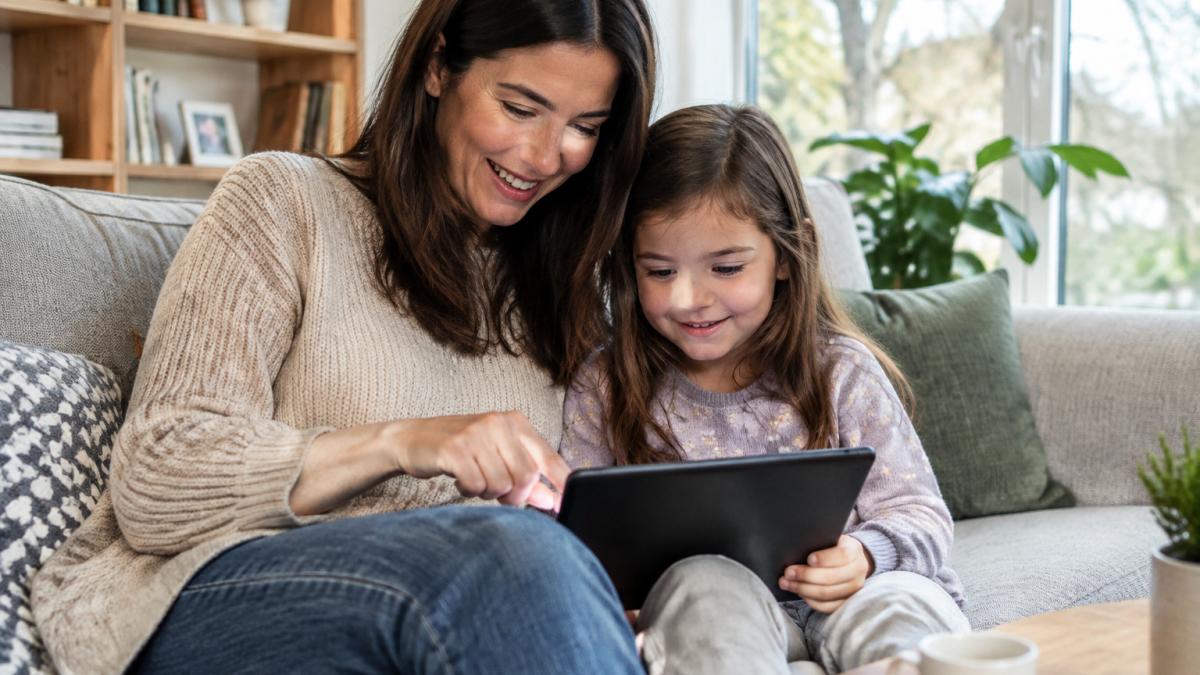
Repetition is one of the main ways toddlers pick up new words, and a curated library is built for repetition. A parent can select a handful of songs and stories with clear vocabulary and let the child hear them again and again, which is exactly the pattern language learning depends on. Because the library is fixed, the child hears the same words in the same settings, not a shifting stream of unfamiliar speech.
Listening skills benefit too. Songs with clear melody and rhythm help children attend to sound patterns, and a parent who has chosen the material can match it to the child's attention span. Keep sessions short and pause to ask simple questions about what the child just heard.
Motor Skills, Movement and Emotional Regulation
Many children's songs are built around movement, and a curated playlist can include videos that invite clapping, dancing, or simple stretches. Active viewing of this kind gives young children a reason to move their bodies rather than sit still for long periods. Pair these sessions with a break for real movement afterwards.
Emotional regulation is another area where predictable content helps. A calm, familiar video is easier for a child to settle into after a busy day than an algorithm-driven feed, which can escalate with bright, fast clips. Parents often use a familiar playlist as a transition tool, especially before bedtime.
The article points to several concrete developmental areas where a curated library can help, summarised below.
| Area | Practical approach | Key point |
|---|---|---|
| Language and vocabulary | Repeat a handful of songs and stories | Repetition is how toddlers learn new words |
| Listening skills | Choose songs with clear melody and rhythm | Match material to the child's attention span |
| Movement and motor skills | Pick videos that invite clapping or dancing | Pair sessions with real movement afterwards |
| Emotional regulation | Use a familiar, calm playlist | Predictable content helps children settle, especially before bed |
Finding Educational Videos for Toddlers Without the Rabbit Holes
Educational videos for toddlers are plentiful, but the search results and sidebar suggestions around them are where things go wrong. A video about counting animals can lead, within a few clicks, to content that has nothing to do with counting. The fix is to decide the library in advance rather than trusting the recommendation engine.
Start with a short list of educational videos you have watched in full and judged suitable. Check each one for length, pacing, and whether it ends with a recommendation panel. Add only those videos to the child's library. Watchly Player removes comments and recommendation algorithms, so the child's library stays limited to what you approved.
Setting Age-Appropriate Screen Time for Children
Screen-time guidance is not one-size-fits-all, and the most useful approach is to treat it as a routine you design rather than a number you pick. Screen-time guidance is commonly discussed by pediatric organisations, and parents should check current recommendations from their paediatrician or national health body.
A practical routine has four parts. First, set a daily watch time that fits your family's schedule, the right number depends on sleep, outdoor play, and conversation time. Second, define a bedtime window so screens are off well before sleep. Third, build in short intermission breaks so children move and re-engage. Fourth, co-view when you can: sit alongside, ask simple questions, and point out what is happening.
Watch out: limits that are enforced inconsistently teach children that the rule is negotiable. The fix is to make the stop time automatic and visible, a timer, a routine cue, or a player that ends the session on its own, so the boundary is not a daily argument.
This is where a curated library changes the equation. Uncontrolled YouTube is a threat to your children because its recommendation engine is designed to keep them watching, and hundreds of research papers on early childhood screen exposure document the risks of algorithmic drift, overstimulation, and inappropriate content.
How to Create a Video Playlist for Kids, Step by Step
The most useful playlists are designed around a developmental objective, not just a theme. Before you add a single video, decide what you want the playlist to support, language and vocabulary, movement and motor skills, emotional regulation, attention and listening, or social interaction, and then choose videos that match that goal. First, set up a separate child profile for each child, since one profile per child keeps libraries and limits apart. This is the step most guides skip, and it is the difference between a random collection and a purposeful library.
Here is a practical sequence that takes about 30 minutes for a first library and far less for updates.
- Create a profile for each child. Add a separate profile, choose an avatar, and set a birth year. Keep one profile per child so libraries and limits stay separate.
- Name the objective. Write one sentence describing what this playlist is for, for example, 'songs that build vocabulary through repetition' or 'movement videos for rainy afternoons.' This keeps selection focused.
- Preview candidate videos in full. Watch each one end to end, noting length, pacing, language clarity, and whether the end screen pushes other content. A video that is fine for five minutes but ends with a recommendation panel is not a good fit for a curated library.
- Check for quality and safety signals. Look for clear audio, slow-to-moderate pacing, no ads or pop-ups, and no comments or sidebars. For accessibility, prefer videos with captions or sign-supported songs when available, and consider sensory needs, some children do better with calm, low-stimulation visuals.
- Sequence for a session. Order videos so the playlist has a gentle start, an active middle, and a calm finish. This mirrors how caregivers structure play and helps with transitions.
- Add videos to the library. Add approved videos one at a time, or start from a pre-made library and remove anything that does not fit the objective.
- Set daily limits. Choose a daily watch time, a bedtime window, and intermission breaks for the profile.
- Review and measure engagement. Every few weeks, check the library and remove videos your child has outgrown. Look for observable signs of engagement, participation, imitation, new words, movement, rather than assuming developmental gains.
Watch out: it is easy to overclaim what a playlist can do. Engagement is not the same as proven developmental progress, so treat the library as one input among many, alongside conversation, play, and reading.
Uncontrolled YouTube is a threat to your children precisely because it removes these design choices, the algorithm decides what comes next. Hundreds of research papers on early childhood media use support the case for deliberate, parent-curated content. Watchly Player lets you expose the best of YouTube to your kids by giving you per-child profiles and automatic limits, so the playlist you design is the playlist your child actually sees.
Start Building Your Child's Safer Viewing Routine with Watchly Player
Uncontrolled YouTube is a threat to your children, and hundreds of research papers on early childhood screen exposure support keeping viewing deliberate and limited. A curated playlist gives you the benefits of video, music, and learning content without the algorithmic drift that causes most problems.
Watchly Player is built for exactly this. Parents can build a parent-approved video library for each child, enforce screen time rules automatically, and get the best of YouTube without comments, ads, or recommendation algorithms. Start a free trial to set up your first child profile and see how a trusted library works in practice.
Frequently Asked Questions
How can parents prevent children from encountering unsuitable videos on YouTube?
Open-ended browsing is the main route to unsuitable content, because autoplay and recommendation systems keep serving related videos that a child can drift into within a few clicks. Parents can reduce this by limiting viewing to a pre-approved list of videos, turning off autoplay, and supervising sessions for younger children. Reviewing each video before it is added, and checking how often the playlist is updated, makes the routine more reliable. Dedicated tools such as Watchly Player are designed to restrict viewing to parent-approved content so that the child cannot wander onto other videos.
How much screen time is appropriate for young children?
The right amount depends on the child's age, sleep, meals, physical activity and the quality of what they watch. Many parents set a daily limit, fix a bedtime cut-off and schedule screen-free breaks between sessions. Short, focused viewing of well-chosen content is easier to balance with play and conversation than long, unstructured sessions. Consistent routines, enforced the same way each day, tend to work better than negotiating limits in the moment.
Can watching videos help children learn language and movement?
Videos can support language and movement when they include simple vocabulary, repetition, songs with clear rhythm, and actions that children can copy. Watching together and talking about what is on screen extends the learning beyond the video itself. Videos should complement active play and real conversation rather than replace them. Parents who choose content with these features and sit with their child get the most developmental value from it.
What are the benefits of curated video playlists for child development?
A curated playlist limits a child's viewing to videos a parent has reviewed for age suitability, content and pacing. This reduces exposure to advertising, inappropriate material and autoplay rabbit holes, and it lets parents match videos to goals such as language, music or motor skills. Because the same material is repeated, children can build familiarity and practise the vocabulary, songs or movements shown. Watchly Player offers a parent-approved library so families can apply these benefits without assembling every list by hand.