Last Updated: November 15, 2026
Quick Summary
Quiet independent play ideas for toddlers work best when you start small: set out one activity on a tray, sit nearby without directing, and begin with just five minutes. Build independent play as a skill over time, using chunky pieces, a defined container, and no correct answer.
- Start with five minutes of solo play and sit on the floor nearby without speaking.
- Two-year-olds need activities with one clear action, chunky pieces, and a defined container.
- Expect ten to fifteen minutes of solo focus from preschoolers, not an hour.
- Swap one of three activity bins per week so returning toys feel new.
- If it fits through a toilet paper tube, it is not a solo-play item for a two-year-old.
Table of Contents
- Why Independent Play Matters (and How to Start)
- 2 Year Old Independent Play Activities
- Quiet Time Activities for 3 4 Year Olds
- Quiet Activities for Toddlers During Nap Time
- Quiet Activities for Toddlers Before Bed
- How to Build a Quiet-Time Rotation System
- Troubleshooting When Your Toddler Won't Play Alone
- Creating a Safe Play Environment
- Frequently Asked Questions
Why Independent Play Matters (and How to Start)
Quiet independent play ideas for toddlers work best when you treat them as a skill you build, not a switch you flip. Many parents want twenty minutes of calm and end up with a bored toddler and a screen instead. The fix starts with lowering your expectations on day one.
Independent play is the practice of a child engaging with an activity alone, with a nearby adult available but not directing. It builds concentration, fine-motor skills, and the ability to self-soothe through boredom.
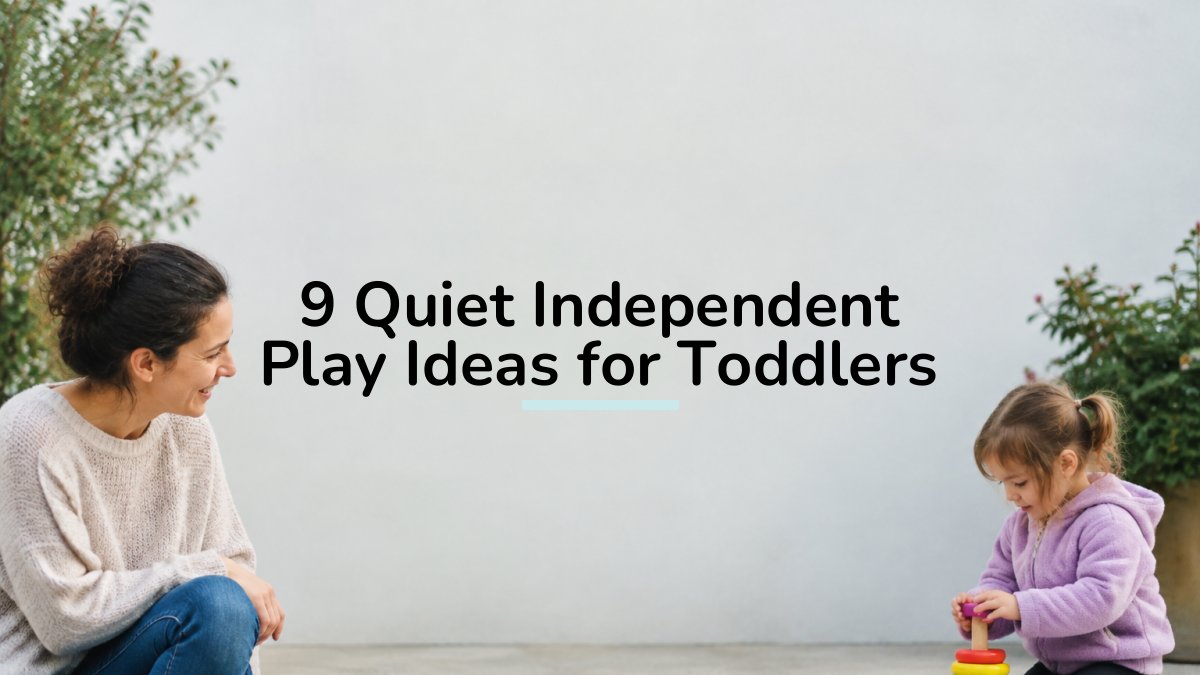
Start with five minutes. Sit on the floor nearby and say nothing. When your toddler looks up, smile and stay put. Most parents quit too early, right at the moment their child is about to settle.
If you want more low-mess options to rotate in, this collection of screen-free activities toddlers actually love pairs well with a quiet-time basket.
2 Year Old Independent Play Activities
Two-year-olds need activities with one clear action and almost no instructions. Handing a toddler a box of mixed craft supplies is a setup for frustration, not focus. The activities that work for this age share three traits: chunky pieces, a defined container, and no correct answer. Expect short stretches of solo focus at first, not twenty minutes.
Try these, with the supervision level each one actually needs:
- Card slot drop. Cut a slit in a shoebox lid and give your toddler a stack of old greeting cards. They post them in, dump them out, and repeat. Cards are large enough to be low-risk, but stay within arm's reach because torn cardboard goes in mouths.
- Bead threading with pipe cleaners. Large beads on a stiff pipe cleaner is easier than string and builds fine-motor skills. This is a supervised activity for two-year-olds, beads are a choking hazard, so count them in and count them out.
- Sticker books. Peeling stickers takes real effort for small hands, which can help hold attention. Choose large, easy-peel stickers and stay nearby; sticker books are low-mess but not zero-mess.
- Board books with flaps. Independent reading starts here, long before words. Board books are sturdier for grabbing and chewing than paper books at this age.
- Contact paper collage. Tape a sheet sticky-side up and let them press on scraps of paper. This one needs an adult in the room because the contact paper itself can cling to faces and hands.
Simple Setup for Young Toddlers
Set out one activity, not five. A single tray on the floor with everything they need is enough, and it keeps the mess contained. Sit within arm's reach, keep your phone in your pocket, and let the first few sessions be short. If your toddler follows you, return without commentary and reset the distance. Watch out: if an activity involves small parts, water, or craft materials, "independent" means nearby adult, not absent adult, the choking-hazard rule (anything that fits through a toilet paper tube is not a solo item for a two-year-old) overrides the quiet-time goal every time.
Quiet Time Activities for 3 4 Year Olds
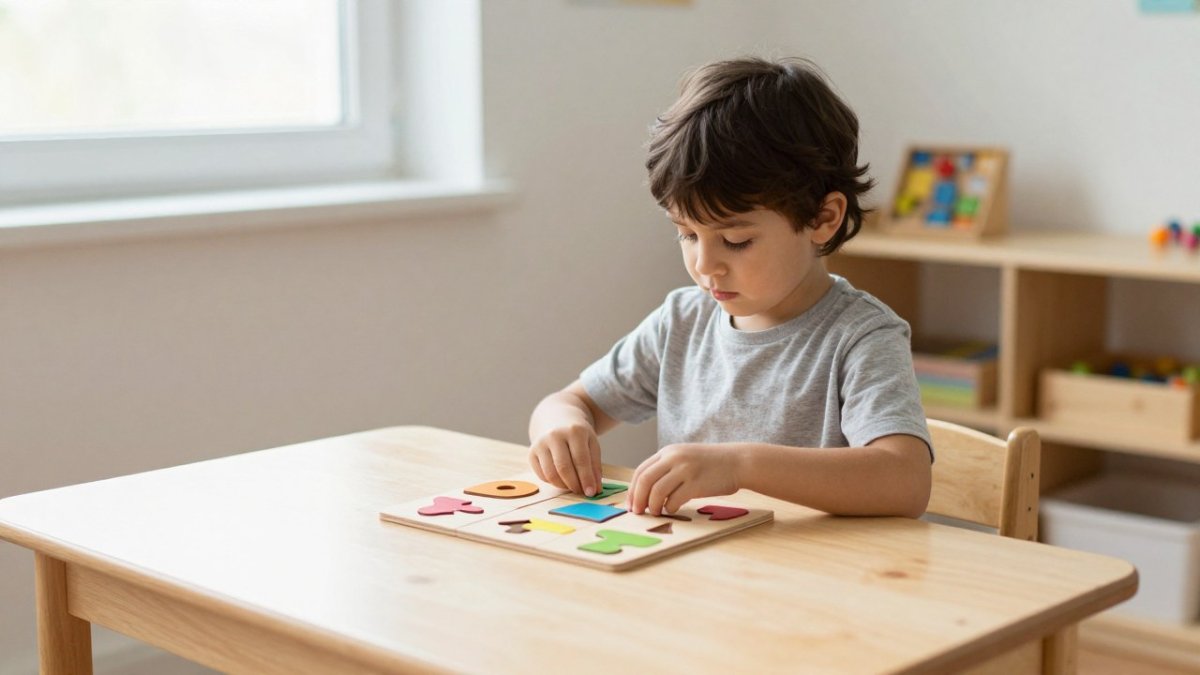
Preschoolers can handle longer stretches and more complex rules, so this is where puzzles, building, and pretend play start to carry real weight. Expect ten to fifteen minutes of solo focus at first, not an hour.
Building Focus with Puzzles and Play
Montessori puzzles with knobs, floor puzzles, and simple matching games all reward persistence. Building blocks and Legos, even the chunky toddler versions, let a child construct and rebuild without adult input. Pretend play with dolls or action figures is the quietest option of all, because the child supplies the story. When a few well-chosen toys have room to stay within reach, children can return to their stories and building projects independently, a balance Tender Tots & Wellness connects with a calmer playroom.
Sticker books and coloring stay in rotation here too. Workbooks work for some children and get ignored by others, so keep them as an option rather than a requirement.
Quiet Activities for Toddlers During Nap Time
Nap time is the one window where you need your toddler quiet without a screen, and it is also when your own energy is lowest. Plan for it the night before. The gap most activity lists miss is that nap-time quiet play is a different job from general independent play: the goal is low-arousal, low-mess, and low-supervision-demand, because you are running on empty.
Build a nap-time basket with three or four items that only appear at this hour. The rotation rule matters here, novelty is what buys you the first ten minutes, and a basket that lives on a high shelf the rest of the day stays novel. Good contents for this window:
- Audiobooks and soft music as background, not as the main event. A predictable playlist signals that this is quiet time, the same way a bedtime routine does.
- A felt board with shapes, silent, reusable, and no small parts that roll under furniture.
- A small water table or a tray of sensory material, genuinely engaging, but this is a supervised activity. Water and dried goods both need an adult in the room, so save these for days when you can sit nearby rather than fold laundry in another room.
- A single puzzle or matching game from the rotation bin, not the whole bin.
Nap-time quiet play can fail when the transition is abrupt, so it can help to give a short warning, move to the quiet corner together, and start the first activity with your child before stepping back.
If you are also trying to manage screen time across the rest of the day, this guide on how to set daily screen time limits covers schedules and bedtime routines on Android and iPhone. And if nap time is the moment you are most tempted to hand over a tablet, it is worth being deliberate: uncontrolled YouTube is a real threat to your children, and hundreds of research papers have examined what algorithm-led feeds expose young children to. Watchly Player lets you expose the best of YouTube to your kids inside a parent-approved library, with no ads, no comments, and no autoplay pulling them somewhere else.
Quiet Activities for Toddlers Before Bed
Bedtime quiet time has one job: bring the energy down, not burn it off. Skip anything with a screen, including a tablet in the same room, and skip anything that winds your child up.
Books and independent reading are the obvious pick, and they work. Soft music, a felt board, coloring with crayons, or a small puzzle on the bed all fit the mood. If you are wondering whether the tablet your child used an hour ago is working against you, this explanation of how blue light affects your child's sleep is worth a read before you plan the routine.
Keep the same three or four activities in the rotation so bedtime becomes predictable.
How to Build a Quiet-Time Rotation System
A rotation system solves the two problems that kill quiet time: boredom with the same toys, and a playroom so full that nothing feels special. You need three bins and a shelf.
| Bin | Contents | Rotation |
|---|---|---|
| Bin A | Puzzles, matching games | Out this week |
| Bin B | Stickers, coloring, drawing | Out next week |
| Bin C | Building blocks, pretend play figures | Out the week after |
Swap one bin per week and keep the other two out of sight. When a bin returns after three weeks, it feels new. Label each bin with a picture so your toddler can put things back, which is half the battle.
Add a quiet-time basket for the daily routine items: books, a small puzzle, and one creative activity. That basket stays out; the bins rotate.
Troubleshooting When Your Toddler Won't Play Alone
Some children take to solo play in a week. Others need months, and a few will resist every setup you try. Here is what actually moves the needle.
If your toddler follows you around the room: start the activity together, then step back one metre at a time. Distance is the skill you are teaching.
If they dump everything and walk away: reduce the materials. One tray with six pieces gets played with; a basket of forty gets dumped.
If they want you to narrate: narrate for two minutes, then go quiet. Silence is the signal that this is their time.
If independent play fails and you reach for a screen as backup: that is the moment to be careful. Uncontrolled YouTube is a genuine threat to your children. There are hundreds of research papers examining what children encounter when an algorithm, not a parent, chooses the next video. The autoplay rabbit hole does not care how old your child is. You can give your child a parent-curated YouTube library with daily limits and breaks built in.
Creating a Safe Play Environment
Safety is the part most activity lists skip, and it changes what you can leave a toddler alone with. The rule we use: if it fits through a toilet paper tube, it is not a solo-play item for a two-year-old.
- Choking hazards: beads, small Lego pieces, and puzzle knobs belong in supervised play only for under-threes.
- Supervision by activity: water tables, sensory bins with dried goods, and anything with paint need an adult in the room.
- Furniture: anchor bookshelves and toy storage to the wall.
- Screens: if a screen is part of the room, know what it can reach. Parents setting up a safe home environment also want to know how to make YouTube safe for toddlers.
Match the activity to the supervision level, and quiet time stays genuinely quiet.
The hardest part of independent play is not the activities. It is holding the line when your toddler asks for a video instead. Watchly Player was built by parents for that exact moment, with AI-powered transcript analysis against 21 safety themes, a parent-approved library only, and daily watch times and bedtime windows that enforce themselves so you are not negotiating every evening. Get started with Watchly Player and hand your child a small, safe corner of YouTube that you chose.
Frequently Asked Questions
What are some quiet play activities for toddlers?
Quiet play includes activities like looking at books, sticker books, simple puzzles, building with blocks, coloring, and pretend play with dolls or action figures. These activities help develop fine-motor skills and focus. For a low-prep option, a 'quiet-time basket' with a few rotating items works well. Always ensure the activities are age-appropriate and safe for unsupervised or lightly supervised play.
How do I encourage my toddler to play independently?
Start with short, realistic timeframes, like 5-10 minutes, and gradually increase. Set up a safe, inviting play area with a few choices, not a huge pile of toys. Practice during calm times of day, not when your child is tired or hungry. Narrate what you're doing nearby so they feel secure. Praise their efforts to play alone. Using a visual timer can also help them understand the expectation.
How long should a toddler play independently?
There's no strict rule, and attention span varies widely between children. The goal is gradual skill-building. Focus on creating a consistent routine and a supportive environment rather than hitting a specific time target. Celebrate small successes.
What is the 10-10-10 rule for toddlers?
The 10-10-10 rule is a parenting strategy for managing screen time and behaviors. It often means 10 minutes of connection time before screen time, 10 minutes of screen time, and then 10 minutes of transition or another activity. While not a scientific standard, it can be a useful framework for setting boundaries. For managing screen time, tools like Watchly Player can automate limits and ensure content is safe.