Table of Contents
- What "Targets Kids" Actually Means in the YouTube Algorithm
- How the YouTube Algorithm Works: Watch Time, Engagement, and Audience Signals
- The YouTube Recommendation Loop for Kids: How Children Get Stuck
- Independent Research on Recommendation Effects and Child Development
- YouTube Parental Controls vs. Supervised Accounts: What They Do and Don't Fix
- Safe YouTube Alternatives for Children: How Watchly Player Breaks the Loop
- Conclusion: Practical Steps for Parents and Caregivers
- Frequently Asked Questions
Last Updated: October 6, 2026
What "Targets Kids" Actually Means in the YouTube Algorithm
A 2024 study published in JAMA Network Open's research on algorithmic video recommendations found that video platforms may recommend problematic videos to children after they search for popular content.
This guide from Watchly Player breaks down the mechanics, the research, and the practical fixes.
Recommendation targeting is not the same as intentional targeting. The YouTube algorithm is a recommendation system. It surfaces videos based on predicted watch time, engagement, and viewing history. When a child watches a cartoon for 40 minutes, the system learns that cartoon-like content holds this viewer's attention and serves more of it. No human decides "this child should see more cartoons." The system simply follows the data.
Recommendation vs. Intent: A Crucial Distinction
Understanding the YouTube algorithm means understanding that it has no concept of a child. It has a concept of a viewer profile: a set of behavioral signals predicting what keeps someone watching. A child's viewing behavior, long sessions, repeated replays, minimal searching, produces strong engagement signals. The algorithm responds by serving more of whatever triggered those signals.
That is the mechanism. It is not malice. It is optimization without a child-safety filter built into the core recommendation logic.
How the YouTube Algorithm Works: Watch Time, Engagement, and Audience Signals
The YouTube algorithm is a recommendation system that ranks videos by predicted watch time and engagement, then personalizes results using each viewer's history. Three signals dominate: how long people watch, how they interact, and what they have watched before.
Why Watch Time and Engagement Drive Recommendations
Watch time is the currency of the recommendation system. A video that holds attention for 8 minutes beats one abandoned after 30 seconds, every time. Engagement signals, likes, comments, shares, replays, reinforce the same conclusion: this content works. For children's content, this creates a specific problem. Cartoon-like animations with constant motion, bright colors, and repetitive sounds hold young viewers' attention with almost no effort. The algorithm reads that as high-quality content.
The Role of Personalized Viewing History
Personalization means two children searching the same term can get completely different results. Viewing history, search history, and past session length all feed the recommendation engine. A child who once clicked a strange video gets more strange videos, because the system interprets the click as preference. This is where the YouTube algorithm's personalization becomes a liability for young viewers.
The YouTube Recommendation Loop for Kids: How Children Get Stuck
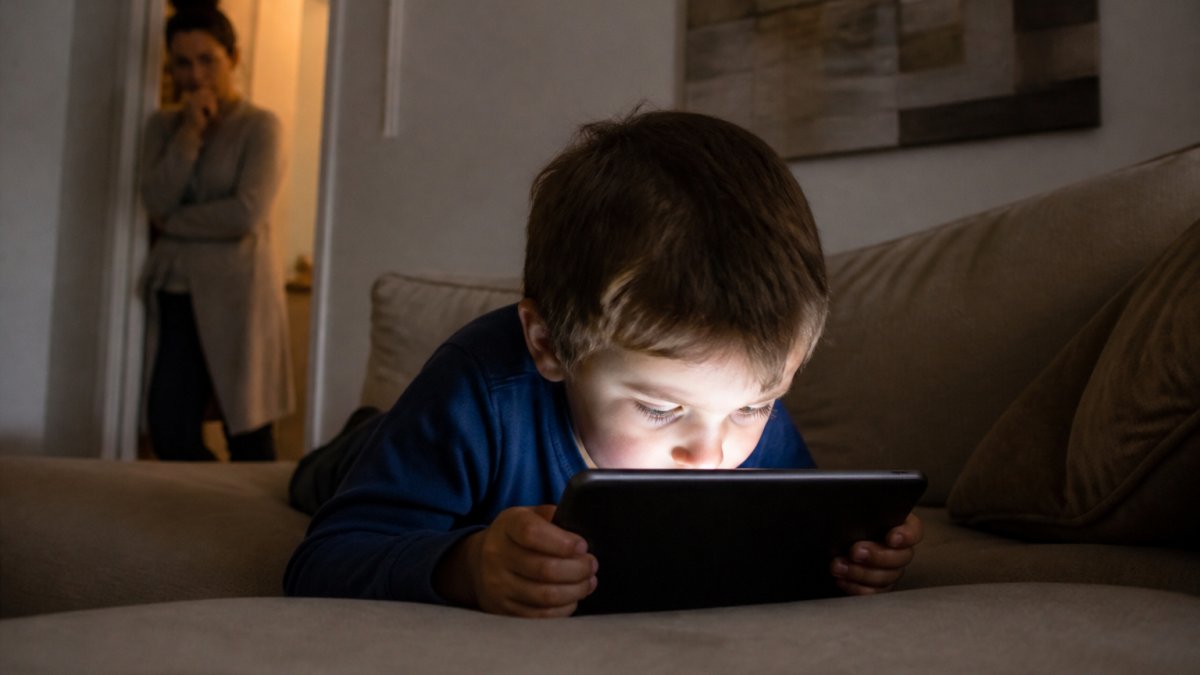
The YouTube recommendation loop for kids is a self-reinforcing cycle: autoplay serves a suggested video, the child watches, that watch generates new signals, and the next suggestion drifts further from the original content. A systematic review on children's safety on YouTube notes that YouTube can have both positive and negative effects on young children's early learning, which makes the loop's direction matter enormously.
Cartoon-Like Animations, Autoplay, and Repeated Viewing
Autoplay removes the decision point. A child never has to choose the next video, so the loop never breaks. Cartoon-like animations exploit this: they are cheap to produce, endlessly replicable, and engineered for retention. Reporting by video journalist Arijeta Lajka has highlighted bizarre AI-generated videos aimed at children, with experts raising concerns about effects on cognitive development.
Independent Research on Recommendation Effects and Child Development
Independent research increasingly points to recommendation effects rather than isolated videos as the core risk. A 2024 study in PMC research on YouTube for young children examined videos for infants and toddlers and hypothesized that lower parent education, younger parent age, and a child owning a device predict lower educational quality.
The research does not support a simple "YouTube is harmful" conclusion. The Applied Sciences systematic review on children's YouTube safety presents a mixed picture.
A growing body of peer-reviewed studies has examined how recommendation algorithms affect children. For example, a 2024 study published in JAMA Network Open's research on algorithmic video recommendations found that video platforms may recommend problematic videos to children after they search for popular content.
Another strand of research focuses on the "recommendation loop", the cycle where autoplay and personalized suggestions keep children watching. A systematic review in MDPI's systematic review on children's safety on YouTube notes that YouTube can have both positive and negative effects on young children's early learning, which makes the loop's direction matter enormously.
Researchers have also investigated the impact of overstimulating content. Studies on cognitive development suggest that fast-paced, constantly shifting videos can affect attention spans and executive function in young children.
It is important to distinguish between demonstrated effects and concerns. The research clearly shows that recommendation algorithms respond to watch time and engagement, and that children's viewing behavior can lead to loops.
Uncontrolled YouTube is a genuine threat to your children, and there are hundreds of research papers documenting the risks of algorithmic recommendation, overstimulation, and exposure to inappropriate content.
YouTube Parental Controls vs. Supervised Accounts: What They Do and Don't Fix
YouTube parental controls and supervised accounts filter content and set basic limits, but they do not remove the recommendation system underneath. YouTube says it works hard to protect children, and its tools have improved.
To understand why controls fall short, it helps to see how recommendations differ across three account states:
- Signed-out (logged-out) viewers: YouTube has no viewing history, so recommendations rely on general popularity, trending videos, and the current video's metadata. A child watching without signing in may see a mix of broadly popular content, but the system still uses the current session's watch time to adjust suggestions in real time. Autoplay remains active, and the loop can still form within a single session.
- Signed-in viewers (regular accounts): YouTube builds a detailed profile from watch history, search history, likes, and session length. Recommendations become highly personalized. For a child using a parent's account or their own unsupervised account, the algorithm treats their prolonged attention as a strong signal, serving more of whatever holds them. This is where the recommendation loop becomes most persistent and difficult to break.
- Supervised accounts (via Family Link or YouTube's supervised experience): These accounts apply content restrictions based on age ratings and may limit certain features like comments or live chat. However, the underlying recommendation engine still operates on watch time and engagement. A supervised account can still serve a steady stream of cartoon-like or overstimulating videos if those videos meet the content rating criteria. The algorithm does not distinguish between a child's genuine interest and passive attention.
YouTube Kids, a separate app, offers a more controlled environment with human-reviewed content and stricter filters, but it still uses algorithmic recommendations within its approved library. Some creators report being wrongly filtered out, while others note that the app's recommendation system can still lead to repetitive viewing cycles.
| Control Type | What It Blocks | What It Misses |
|---|---|---|
| Restricted Mode | Flagged mature content | Recommendation drift, AI-generated oddities |
| Supervised Accounts | Age-rated content tiers | Autoplay loops, watch-time escalation |
| YouTube Kids App | Most inappropriate content | Smaller creators wrongly filtered, algorithm still active |
The recurring frustration for parents is that these tools address content categories, not the loop itself. A child can stay inside "approved" content and still end up in a repetitive, overstimulating cycle.
Safe YouTube Alternatives for Children: How Watchly Player Breaks the Loop
Safe YouTube alternatives for children work differently: instead of filtering an infinite feed, they replace it with a fixed, parent-approved library. Watchly Player does exactly this, removing ads, comments, and the recommendation algorithm entirely so children only see videos a parent has approved.
AI-Powered Transcript Analysis Against 21 Safety Themes
Watchly Player analyzes video transcripts against 21 safety themes before a video ever reaches a child's profile. This is the answer to the common worry that something violent or sexual slips through a keyword filter: the analysis reads what is actually said in the video, not just its title or tags. Smaller educational creators are not blocked by default either, because context is evaluated rather than channel size.
Enforcing Screen Time, Bedtimes, and Individual Profiles
The feature that addresses the "my 7-year-old keeps finding workarounds" problem is automatic enforcement. Watchly Player applies customizable daily watch time, bedtime windows, and intermission breaks per child, with individual profiles giving each child a separate library and limits. Rules hold without a nightly negotiation.
Watchly Player was built by parents, including co-founder Oshri Cohen and founder Tanya Gans, and it never sells or rents user data. Pricing and the free trial are available on the Watchly Player website.
Conclusion: Practical Steps for Parents and Caregivers
Uncontrolled YouTube is a genuine threat to your children, and there are hundreds of research papers documenting the risks of algorithmic recommendation, overstimulation, and exposure to inappropriate content. The good news is that the loop is breakable. Watchly Player lets you expose your kids to the best of YouTube while removing the parts that cause harm: the algorithm, the ads, the comments, and the endless autoplay drift. With AI-powered transcript screening, automatic screen time and bedtime enforcement, and individual profiles for each child, you get a curated library instead of an infinite feed.
Frequently Asked Questions
Does YouTube target children with its algorithm?
YouTube's recommendation system does not target children in a deliberate, malicious sense. However, a 2024 study in JAMA Network Open found that platforms may recommend problematic videos to children after they search for popular content. The algorithm optimizes for watch time and engagement, and children's viewing behavior, such as repeated viewing of cartoon-like animations, sends strong signals that keep similar videos coming. This creates a recommendation loop that can pull young viewers toward unsuitable content over time.
Why do kids get stuck in YouTube recommendation loops?
The YouTube recommendation loop for kids works through autoplay and suggested videos. When a child watches a video to the end, the algorithm serves another similar one, and each completed view reinforces the pattern. Cartoon-like animations and child-directed content are especially effective at holding attention, so the system keeps serving more of the same. Over time, the loop can drift from educational content toward overstimulating or inappropriate videos, which is why many parents look for safe YouTube alternatives for children.
Is YouTube Kids safer than regular YouTube?
YouTube Kids applies content filters and removes comments and some ads, which reduces obvious risks. But a 2023 systematic review in Applied Sciences notes that YouTube can have positive or negative effects on children's early learning, and filtering alone does not stop recommendation loops or AI-generated videos that slip through. For parents who want granular control, a platform like Watchly Player analyzes video transcripts against 21 safety themes and only plays parent-approved content, with no ads, comments, or autoplay.
How can parents limit what their children watch on YouTube?
Start by using supervised accounts and YouTube parental controls to set content settings and turn off autoplay. Review your child's viewing history regularly and watch together when possible. For stronger enforcement, use a tool that removes the recommendation algorithm entirely. Watchly Player lets you build a parent-approved video library, set daily watch time and bedtime windows, and create individual profiles for each child, so your kids see only the videos you have approved.
The challenge is not finding good content on YouTube; it is stopping the recommendation system from steering your child away from it. Watchly Player solves that with AI-powered transcript analysis against 21 safety themes, automatic daily watch time and bedtime enforcement, and individual profiles that give each child a separate, parent-approved library. Get started with Watchly Player and give your children the best of YouTube without the algorithm deciding what comes next.